


Honouring a Legend: and a Pivotal Turning Point
Updated: 6 days ago

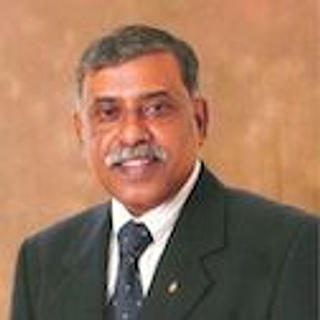
Many know the late P.T.K. Panicker as a titan of Indian industry—the former Director (Personnel) of TISCO (Tata Steel) and a foundational architect of XLRI Jamshedpur. To me, he was a foundational mentor who, along with Prof C. Sarat Chandran and Prof T.K. Nair, formed a brilliant academic trio that shaped my early path at the Madras School of Social Work (MSSW). I had the extraordinary privilege of being guided by an exceptional combination of minds: Mr Panicker brought the grand corporate ethos of Tata Steel’s industrial democracy; Prof Nair was an unmatched expert in Research Methods and Statistics who grounded us in empirical data precision; and the distinguished Mr. C. Sarat Chandran, a Master’s graduate in Development Economics from the London School of Economics (LSE), a Senior Fellow of the LSE, and the head of International Marketing at RPG group going on to become a Development Economist and Consultant at the Commonwealth Development Corporation (CDC) infused our classrooms with rigorous macroeconomic theory, labour economics, and international development perspectives.
This core academic trio was brilliantly complemented by frontline industry practitioners who brought real-world corporate rigour straight to the classroom. Prominent among them were Mr. Gopu Gopalaratnam, a Glasgow-trained Industrial Engineer and MBA who managed operations for Lipton and Wavin India, teaching motion study, time analysis, and line balancing effortlessly through real-life examples, making our learning intuitive and unforgettable; and Dr. T. T. Srinath, a postgraduate in Human Resource Management from XLRI, Jamshedpur (who later earned his Ph.D. in Organizational Behaviour from Anna University), who through immersive role-plays and laboratory sessions, mentored us to understand human relations as a living, breathing discipline.
Entering this postgraduate programme—which was closely modelled on XLRI—whilst already holding an A+ M.A. in Economics, I was exceptionally fortunate to absorb their deep executive wisdom, sharp macroeconomic insights, and rigorous empirical frameworks. Yet, institutions are ultimately driven by people, and there are times when institutional politics unhappily attempts to overshadow pure merit. In hindsight, the quiet injustice that disrupted my own path also befell the postgraduate centre itself. Though built by Panicker with all the potential to become another XLRI-like premier institution, it ultimately fell by the wayside, undone by internal incompetence and a tragic lack of mission or vision.
My first major clash with the structure came when the management attempted to manipulate the allocation of specialisations to MSW students in the second year. Refusing to allow unfairness to stand, I used the institution's own guidelines to draft a legally sounding notice to the Director. That confrontation forced the administration to back down completely, securing the Personnel Management track for many of my peers, and forcing a permanent change to the institution's prospectus from that year forward.
The systemic friction only intensified during our final examinations. When a highly irregular, out-of-syllabus final paper stumped our entire batch, my advanced preparation allowed me to pass it comfortably. However, a rigid bureaucratic rule was weaponised against me because I had missed a separate internal exam while away on an official assignment at ISI Bangalore under Prof Nair. Despite my overwhelming academic dominance on the final paper, the Academic Council—dominated by the Director's hand-picked inductees—insisted on an uncompromising separate 50% passing threshold for the missing internal component. It was a thinly veiled ideological grudge, targeting me simply for my close academic association with Prof Nair.
Refusing to allow clear academic achievement and fairness to be quietly buried, I went into full confrontation mode. I individually confronted the council members, including the leading figures of the industry who were in that forum, directly questioning their moral authority to sit on an academic forum while denying basic justice. When I threatened a formal legal notice, the Board hurriedly met and granted a re-examination, which I answered with a flawless score.
Though my academic record was completely vindicated, the bridge was burned. Branded a "rebel" and a "non-conformist" by the corporate establishment, I made a conscious choice never to approach that compromised network for a job, permanently walking away from a corporate career in Personnel Management & Industrial Relations (PM&IR).
The system failed, but Mr P.T.K. Panicker’s integrity did not.
Realising the gross injustice that had taken place, this great man did something very few leaders in positions of power ever have the humility to do: he called me to his office and sincerely apologised to me. He knew that a promising career had been destroyed by petty institutional politics, but his validation preserved my spirit and reinforced my ethical backbone.
I chose a completely different path in life, but the standard of absolute integrity I witnessed in Mr Panicker remains the bedrock of who I am today. Rest in peace, Sir. Your light never goes out..|


Comments